Exactly How To Review A Peptide Coa Real Vs Fake
Confirmed > 99% Lab-grade Peptides Researchers and pharma firms insist on high purity due to the fact that contaminations can trigger deceptive outcomes, mask true organic activity, introduce toxicity, or lower the efficiency of potential drugs. Dependable, reproducible information depends on pure beginning products. The effects of making use of impure peptides can range from aggravating obstacles to major security issues. A top quality chromatogram has a single, symmetrical main peak with a level standard on either side. For the majority of research applications complying with just how peptides work at the mobile level, higher pureness gives more trustworthy outcomes. A Certification of Evaluation (COA) records the logical testing executed on a particular peptide set. Finding out to check out and verify COAs is crucial for any serious researcher. Hefty metals screening is much less essential for routine verification than pureness and identification testing. However, when assessing a new supplier or exploring unexpected negative effects, metals evaluating can dismiss or recognize contamination problems. Peptide purity isn't simply a number on a tag-- it's a window right into the quality of the artificial procedure and a predictor of exactly how trustworthy your research study results will be. During solid-phase synthesis, each amino acid coupling step has a yield of roughly 99-- 99.8%. When a coupling stops working, the growing chain is topped to prevent further prolongation of the incorrect series. The outcome is a peptide that's much shorter than planned-- missing out on several amino acids. Tailored advice for individual researchers looking for dependable peptide suppliers.
Certified Peptides
A lot of 3rd party testers offer both MS & HPLC in a single examination and will only inform you in case Mass Spec does not find the right series. As a finest technique, constantly verify that your tester is offering MS. Mass Spectrometry (MS) is the only reliable means to verify identification. HPLC validates that a leading, relatively pure compound is present. Mass spectrometry (MS) verifies what that worsen actually is. For us, purity isn't simply a percentage-- it's a guarantee of integrity, consistency, and respect for the science being done. A 2016 study released in Nature found that greater than 70% of scientists had attempted and fallen short to reproduce another scientist's experiments. While peptide purity isn't the only variable, utilizing poorly identified reagents is a recognized contributor to irreproducible results. This is why respectable suppliers supply both HPLC and MS data on their Certifications of Analysis. As particles leave the column, they go through a detector-- usually a UV detector set to 214 or 220 nm, wavelengths where the peptide bond takes in light strongly. The detector documents how much UV light is absorbed over time, producing a graph called a chromatogram. Purity is the percent of publications in the shipment that have every web page printed properly, in the ideal order, without any missing out on chapters and no added pages stuffed in.Endotoxin Screening:
Is 95% pureness good for peptides?
Peptides with an 85% pureness level or greater are typically utilized in enzyme assays or organic task research studies. Peptides with pureness above 95% are outstanding for quantitative evaluation.
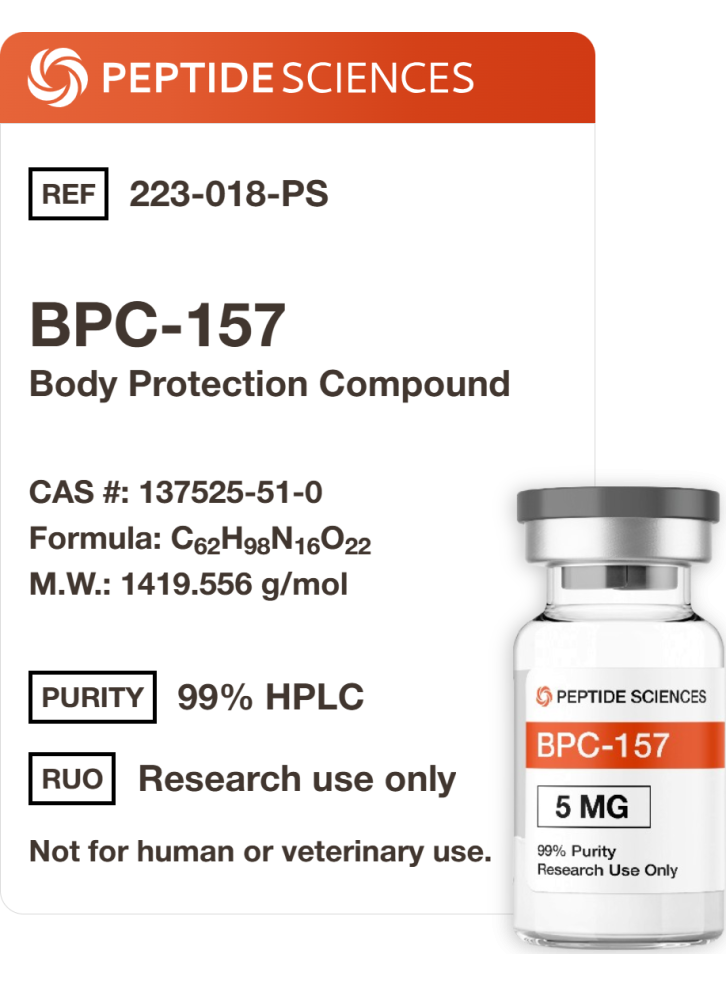
- Researchers typically assess pureness alongside various other high quality metrics rather than depending solely on a solitary portion.
- High-performance fluid chromatography (HPLC) confirms ≥ 99.3% purity, while mass spectrometry (MS) verifies molecular identification and architectural precision.
- Peptide purity is commonly shared as a portion, such as 95% or 98%.
- Scientists depend upon accurate, verified compounds to guarantee their searchings for are both valid and consistent.
- The peptide dose chart presumes reasonable pureness degrees for accurate dosing.
Does The Coa Assurance Endotoxins Or Sterility Testing?
But these COAs typically come from the supplier's own screening, developing an obvious dispute of rate of interest. Also when vendors assert third-party screening, validating those claims needs initiative most buyers do not make. Scientists typically assess mass spectrometry results alongside HPLC data to develop a more total understanding of product quality. As the study peptide sector remains to grow, understanding exactly how peptide purity testing functions can assist researchers make more enlightened sourcing choices and far better evaluate supplier transparency. Pollutants aren't simply non-active fillers; they can actively interfere with your work. Peptide pureness screening stays one of the most crucial tools researchers use to evaluate study substance top quality. Through techniques such as HPLC and mass spectrometry, scientists can much better understand peptide structure, verify product identification, and review vendor top quality criteria. When incorporated with Certifications of Evaluation and clear documentation, purity testing aids support educated sourcing choices and long-lasting PharmaGrade.Store combination peptides research consistency. When assessing a peptide suppliers list, researchers need to focus on suppliers that use extensive analytical data. Business intent for peptides frequently leads to a market saturated with resellers who might not verify the security of their supply throughout transit. Examples go through independent third-party research laboratory verification. High-performance fluid chromatography (HPLC) verifies ≥ 99.3% purity, while mass spectrometry (MS) validates molecular identification and structural accuracy. Reputable measurement techniques are essential for quality control. Imaginative Peptides recommends a series of various pureness levels to help you choose the ideal peptide purity for peptide-based assays and applications. The adhering to list shows the suggested peptide pureness levels needed for numerous peptide applications. Peptides are commonly used in the clinical aesthetics, cosmetics, and biomedical fields due to their distinct organic task and wide application potential. Nevertheless, the high quality of peptide products straight affects their effectiveness and security, making precise quality screening services important. BOC Sciences uses thorough peptide screening services to customers across markets, guaranteeing items fulfill stringent market needs and guaranteeing item consistency, security, and effectiveness. It also supports traceability-- each set's laboratory recognition record can be linked to its COA and regulative filings, producing a clear proof.
